Why Do Sculptural Jewellery Pieces Feel Different?
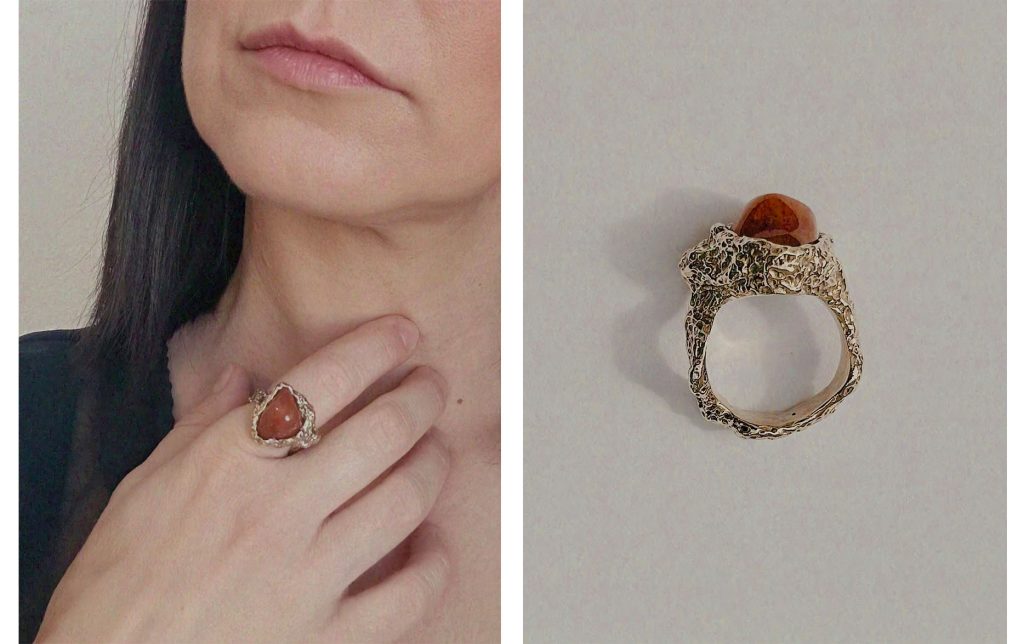
A heavy ring changes the way a hand moves.
Not dramatically. Just enough to make someone use their hands more consciously. A wider form slows the movement of the fingers. A raw surface keeps pulling the eye back for another look. Some jewellery pieces do more than decorate the body. They subtly alter its presence.
We often call these objects sculptural jewellery.
The phrase gets used constantly now, yet it is surprisingly difficult to define what actually makes a piece feel sculptural. An organic shape alone is not enough. Neither is oversized scale. And it does not become interesting simply because it tries to appear more “artistic.” The difference usually lies somewhere else. In the way the object relates to the body, to material, and to attention itself.
It operates more slowly.
It does not always want to be liked immediately.
That hesitation can be part of the appeal.
It Does Not Begin as Decoration
Historically, jewellery was often tied to status, representation, or ornamentation. Polished gemstones, symmetry, and highly reflective precious metals functioned for centuries as cultural signals. They communicated wealth, refinement, social position.
Contemporary sculptural jewellery searches for different kinds of emphasis.
It does not really want to shine. It wants to exist with weight. It works not only as decoration, but as an object. It has mass, proportion, texture. Sometimes it feels closer to a small sculpture or a found object than to jewellery in the traditional sense.
This way of thinking became more visible around the middle of the twentieth century, when the boundaries between sculpture, craft, and object design began to soften. Many artists stopped chasing perfect surfaces and became more interested in how materials behave. Form was no longer treated as a fixed final result. It started to emerge gradually, through process and adjustment.
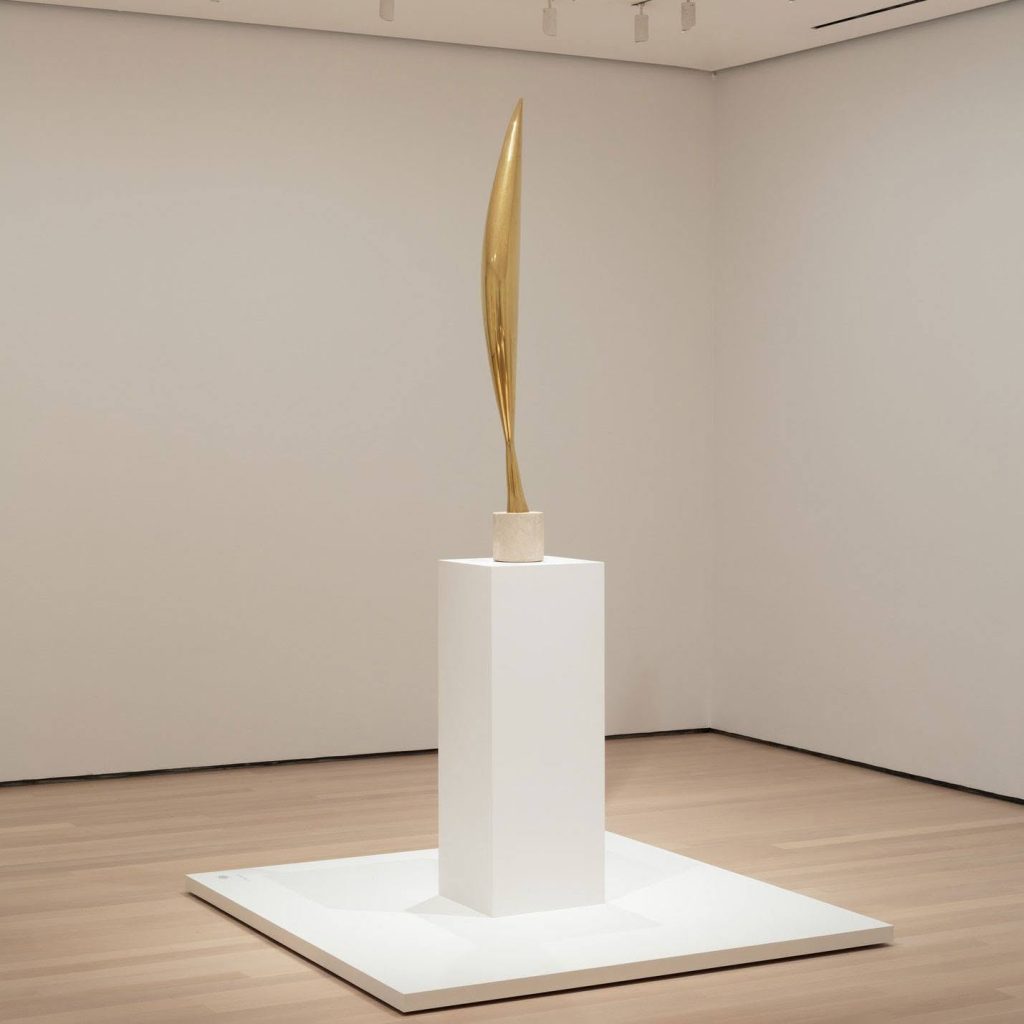
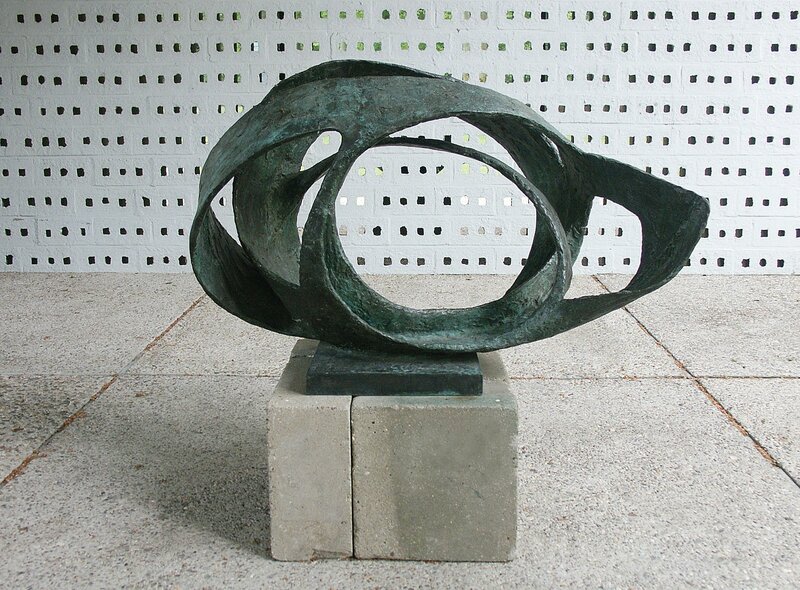
The work of Constantin Brâncuși stripped form down almost completely. He was not trying to capture detail. He focused on mass, rhythm, proportion. The biomorphic sculptures of Jean Arp often look as if they were shaped by natural growth rather than designed by a human hand. In the work of Barbara Hepworth, absence and inner tension become just as important as the material itself.
Those ideas still appear in contemporary jewellery today.
Not as direct references. More as a visual language.
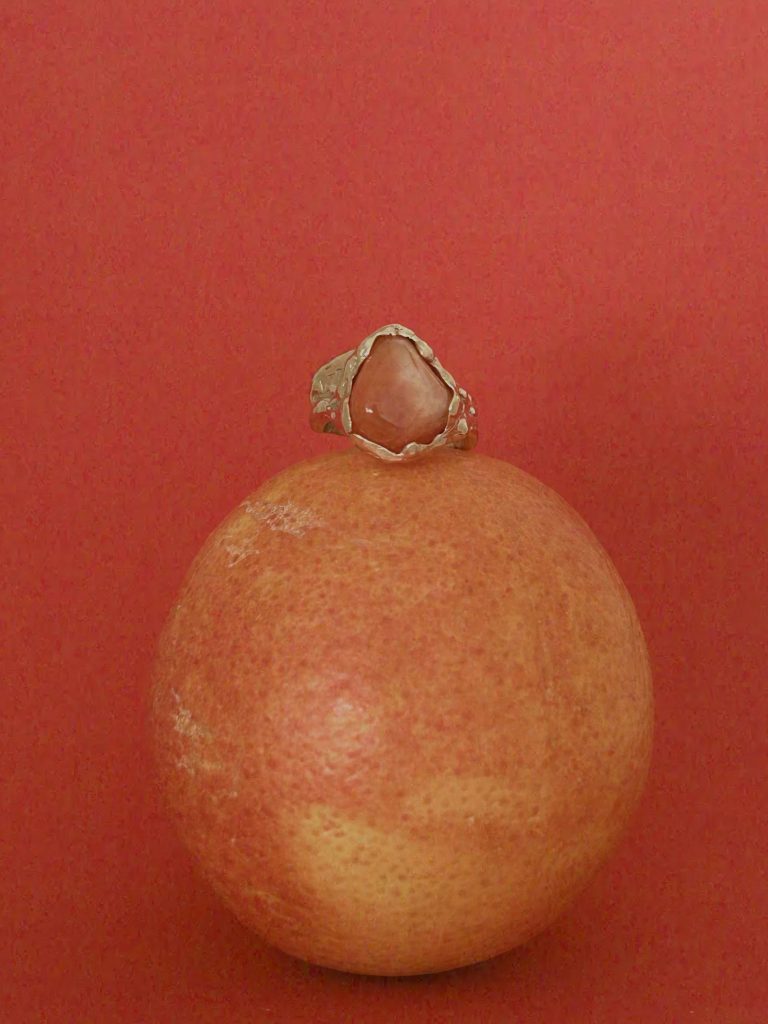
Irregular circles. Melted surfaces. Asymmetrical proportions. Forms that feel less controlled than still in the process of becoming.
The Strange Familiarity of Organic Forms
People often seem instinctively more drawn to slightly irregular forms than to perfect geometry.
Perhaps because nature itself rarely produces true symmetry. The curve of a river, the erosion of stone, the surface of a shell all emerge through slow transformation. Time, pressure, movement, accident.
Organic forms therefore tend to feel less “designed.” More human. Calmer.
There is a reason these shapes keep returning in contemporary sculpture and design. The work of Isamu Noguchi captures this sensitivity particularly well. His sculptures and furniture feel precise without becoming rigid. There is usually some quiet sense of internal movement inside them, as though the form were still shifting slightly.
That sensation matters in jewellery too.
An earring is never fully static. The movement of the body constantly changes the proportions, reflections, and shadows. A ring surface looks different in morning light than it does in the evening. The eye cannot fully read an asymmetrical object in a single glance.
Maybe that is why these pieces can remain interesting for longer.
They do not reveal themselves immediately.
Sometimes the Surface Matters More Than the Shape
Texture is one of the most compelling parts of sculptural jewellery. Often it defines the character of the object more strongly than the silhouette itself.
Highly polished surfaces reflect light cleanly. They feel smooth, elegant, controlled. A raw or oxidised surface behaves differently. It creates shadows. It adds depth. It feels closer somehow. More tactile.
Sometimes the metal almost resembles a miniature landscape.
This is partly why lost wax casting became such an important technique for many contemporary jewellers. The process allows form to emerge less sterily. Marks left by wax, the movement of molten metal, tiny irregularities often remain visible in the final piece.
And those traces preserve something important.
They remind us that the material did not simply execute a plan. It participated in the shaping of the object.
This way of thinking has long existed within Japanese object culture. The concept of wabi-sabi is often reduced today to the idea of “imperfect beauty,” though it is really a much more layered relationship with time and material. Wear, patina, irregularity are not treated as flaws. They become evidence that an object has lived a real life.
That may be why a raw surface can sometimes feel more intimate than a perfectly polished one.
The Body Completes the Object
It is difficult to fully separate sculptural jewellery from the body. These objects can still function inside a gallery or photograph, but they become truly alive in movement.
A heavier earring turns more slowly while walking. A wide ring changes the perception of space between the fingers. A necklace follows the rhythm of breathing.
At that point the jewellery no longer behaves as an isolated object. The body finishes the form.
This may be one of the clearest differences between sculpture and jewellery. A sculpture usually exists independently. Jewellery always remains connected to someone. Skin, gestures, posture, use.
And over time, that relationship becomes visible.
Metal softens through wear. Surfaces change. The object slowly adapts to its wearer.
That transformation is often part of what makes sculptural jewellery beautiful in the first place. It does not remain completely untouched.
The Fatigue of Perfection
Visual culture over the past decade has moved strongly toward smoothness and instant readability. Social media accelerated this even further. Clean outlines. Perfect lighting. Easily digestible forms.
In that environment, rougher organic objects almost interrupt the pace.
They are not always perfect at first glance. Sometimes they seem strange. Too heavy. Too irregular. Or simply not “finished” enough according to conventional expectations.
Still, more and more people are drawn to them.
Perhaps because inside an overly optimised visual world, people begin searching again for objects that still carry traces of time, material, and the human hand.
Not flawless objects.
Objects with character.