What Is Brass, Really? Common Questions About Brass Jewellery
There are a lot of misconceptions about brass, especially when it comes to jewellery. Many people worry that the colour will wear off, that it will turn their skin green, or that it might cause an allergic reaction.
Since brass has been one of the main materials I work with for years, I thought it would be useful to answer some of the questions I hear most often.
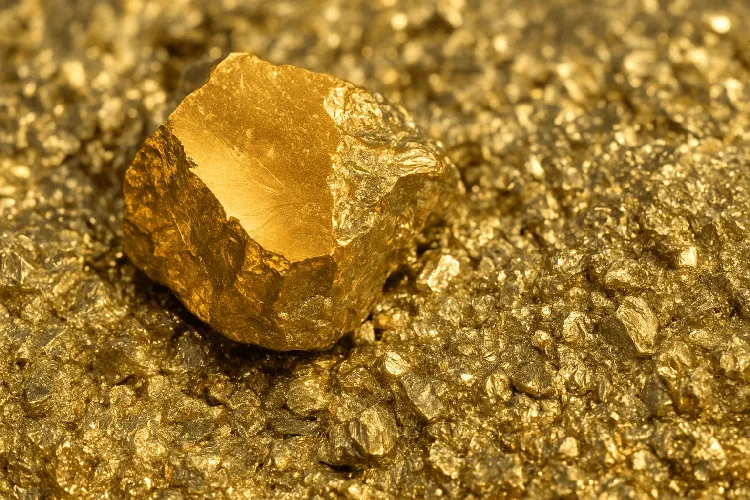
What Exactly Is Brass?
Brass is an alloy made primarily of copper and zinc. It usually contains no nickel, which is worth mentioning because nickel is one of the most common causes of metal allergies.
Its colour and hardness depend on the ratio of copper and zinc. Some brass alloys have a lighter golden tone, while others appear deeper and slightly warmer.
Like many metals, brass oxidises over time. This means the surface can darken or develop a patina, especially when exposed to moisture. It’s a completely natural process.
Brass is harder and more durable than pure copper, though softer than steel. It is also a relatively dense metal, which is why a solid brass ring tends to have a noticeable weight in the hand.
It melts at a relatively low temperature, around 900–940°C, making it easy to cast, solder, polish and engrave.
Because of its copper content, brass also has natural antimicrobial properties. Bacteria and other microorganisms tend to survive for much shorter periods on its surface than on many other materials.
Does the Colour Wear Off?
No.
This is probably the most common misconception about brass jewellery. Brass is not a gold-coloured plated finish. The material itself is golden throughout its entire cross-section.
Many people assume there is a thin layer of gold on the surface and that a grey metal will eventually appear underneath. They are often surprised to learn that even if a piece becomes scratched or worn, the same golden colour remains visible beneath the surface.
What changes over time is the finish.
Brass oxidises as it reacts with oxygen and moisture in the air. As a result, the bright golden surface may gradually lose some of its shine and develop a darker, more matte appearance.
That isn’t the metal wearing off. It’s simply a surface reaction.
The oxidised layer can be removed quite easily, and the metal itself is not being damaged or worn away. With occasional cleaning and care, the original appearance can be restored.
People often recommend avoiding water altogether when wearing brass jewellery. There is some truth to that, but I personally make an exception for hand washing. In fact, I usually suggest gently rubbing a brass ring with soapy water while washing your hands, then rinsing it thoroughly. In my experience, this helps slow down the formation of early oxidation and keeps the surface looking brighter for longer.
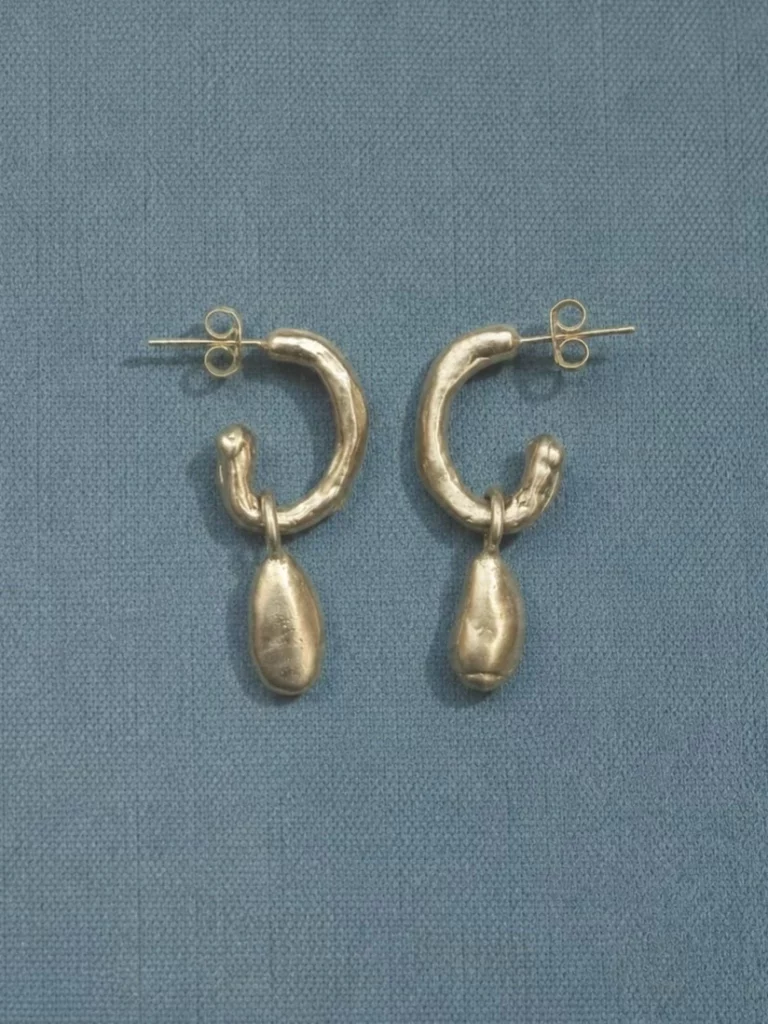
Will It Turn My Skin Green?
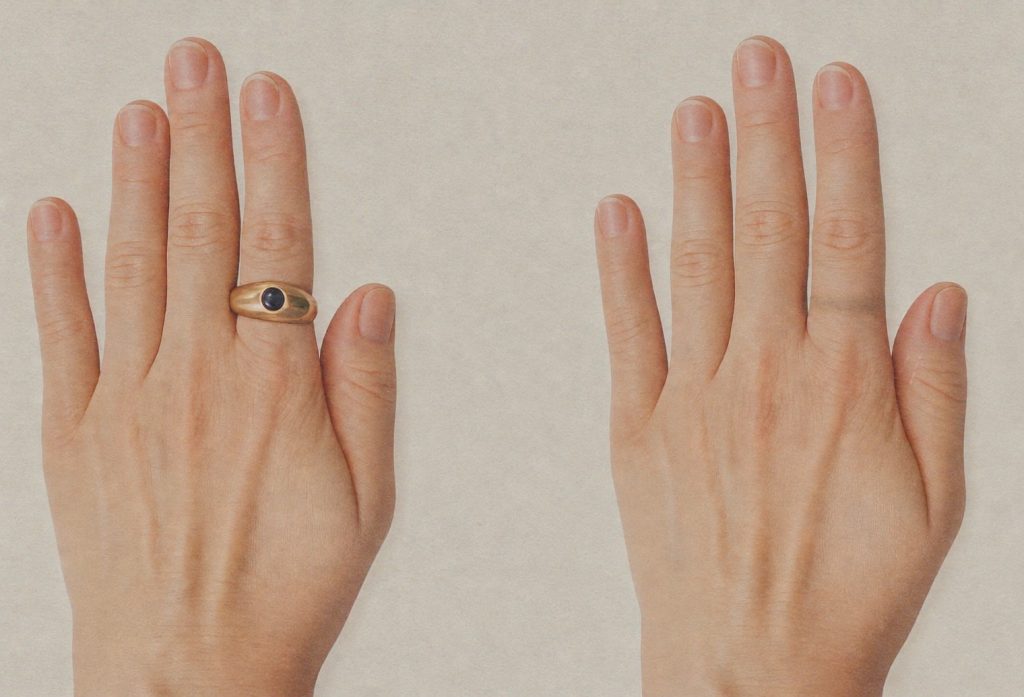
Yes, it can happen.
What is important to understand is that this is not an allergic reaction.
When brass leaves a green mark on the skin, it is usually the result of copper oxidation transferring onto the surface of the skin. In simple terms, it is the copper oxide that causes the colour.
This is a purely surface-level effect and it washes off easily. Skin chemistry, perspiration, humidity and even certain cosmetics can influence how noticeable it becomes.
For some people, it barely happens at all.
Can Brass Cause Allergies?
Most people can wear brass jewellery without any issues.
It is worth repeating that pure brass does not contain nickel. Since nickel is one of the most common metal allergens, this makes a significant difference compared to many inexpensive fashion jewellery pieces and plated accessories.
As mentioned earlier, green discolouration is not the same thing as an allergic reaction. A genuine allergy is more likely to involve redness, irritation, itching or discomfort.
I have been making brass jewellery for eight years, and during that time I have only received feedback about a single genuine allergic reaction.
How Do You Clean Brass Jewellery?
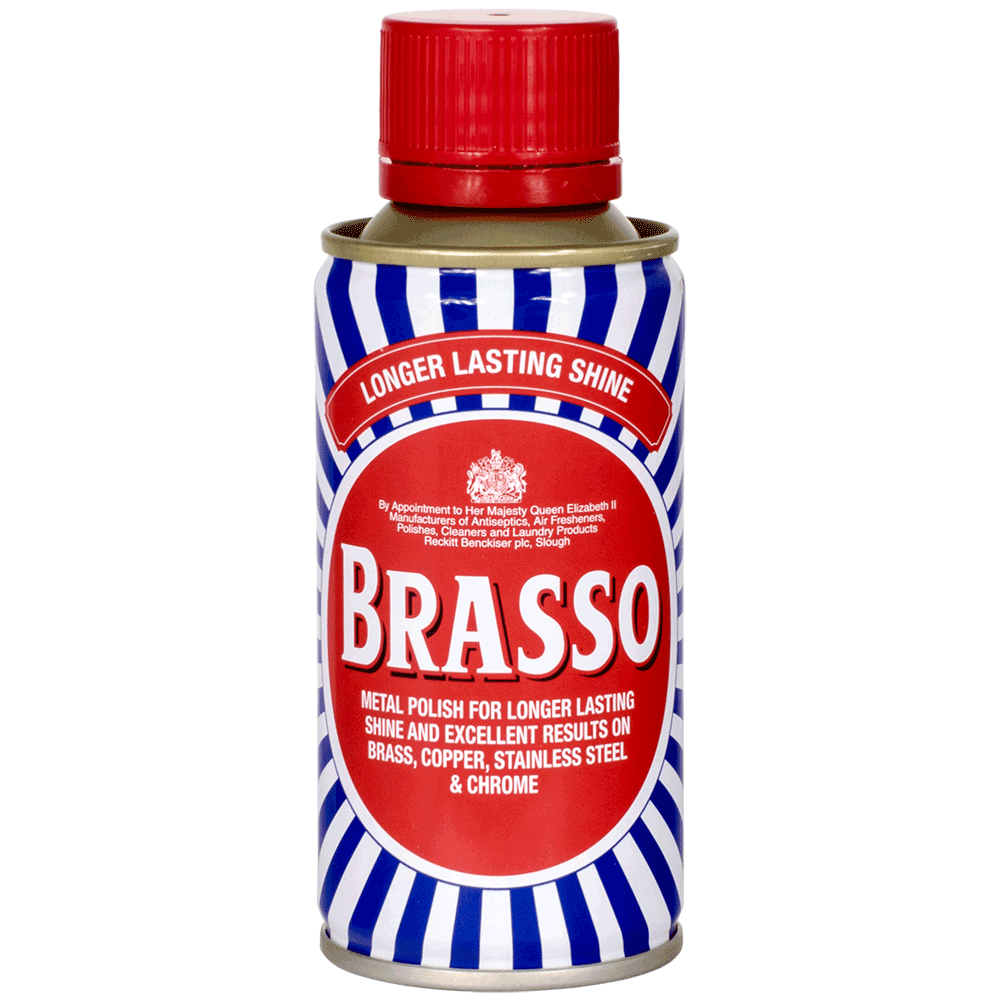
Most oxidation can be removed quite easily at home.
A jewellery polishing cloth is often enough to refresh the surface. If heavier oxidation develops, products specifically designed for brass or copper can be very effective. Brasso, for example, is a classic metal polish and one of my personal favourites.
Many people also use toothpaste, lemon juice or a mild baking soda paste at home, and these methods can work surprisingly well.
Brass does require occasional care, and I think it is worth accepting that as part of the material. In return, there is no coating that can chip, peel or wear away over time.
Why Don’t I Gold Plate My Jewellery?
This is another question I get quite often.
Gold plating wears down over time, especially on rings that are constantly exposed to water, skin contact and everyday friction. Eventually the plated surface can become uneven or patchy.
In most cases, that cannot be repaired properly at home. The piece needs to be replated.
With solid brass, there is no coating to wear away. The surface changes, oxidises and develops character, but the material itself remains exactly the same.
Environmental considerations have also played a role in my decision not to use gold plating. The process involves chemicals, creates additional environmental impact and ultimately produces a surface that is temporary rather than permanent.
That is why I prefer working with solid material instead of relying on a coating.
In Closing
Brass is not a perfect material. It oxidises, it occasionally needs cleaning, and it may sometimes leave a mark on the skin.
In return, what you are wearing is not a surface treatment but the material itself. For me, that remains one of the most appealing things about it.